The slowest part of cooking on a weeknight was never the actual cooking. It was standing at my cutting board dicing an onion while a pan heated up behind me, eyes watering, garlic still to go, and dinner pushed back another ten minutes before I'd even turned a burner up past low. My kitchen gives me one run of counter, about seven feet from the sink to the stove, and I don't have a second prep station or an extra pair of hands to speed that part along. What changed it wasn't a new knife or a sharper technique. It was building a real routine around a Hamilton Beach 3-cup electric chopper small enough to live in the cabinet next to my stove and fast enough to earn a spot on the counter every time I cook.
This is the actual method I use on the Hamilton Beach, not a rough idea of one. How I cut vegetables before they go in the bowl, how full I load it, how long I press, and how I batch bigger jobs so the bowl's small size never turns into a bottleneck. I've run this chopper most nights for months, and the difference between a good batch and a mushy, uneven one almost always comes down to these five steps, not the appliance itself.
One thing up front. A 3-cup bowl is not a full-size food processor, and no amount of technique changes that. This guide is built around that limit instead of pretending it away, which is why the loads described here are smaller than what you'd see in a guide written by someone who's never actually owned a compact chopper.
The chopper this whole method is built around
Everything below assumes the Hamilton Beach 3 Cup chopper's press-to-run lid and small bowl. If you're shopping for one, check today's price before you start cutting, it's one of the cheapest appliances in my kitchen.
Amazon Check Today's Price on Amazon →Step 1: Cut vegetables into rough chunks before they ever touch the bowl
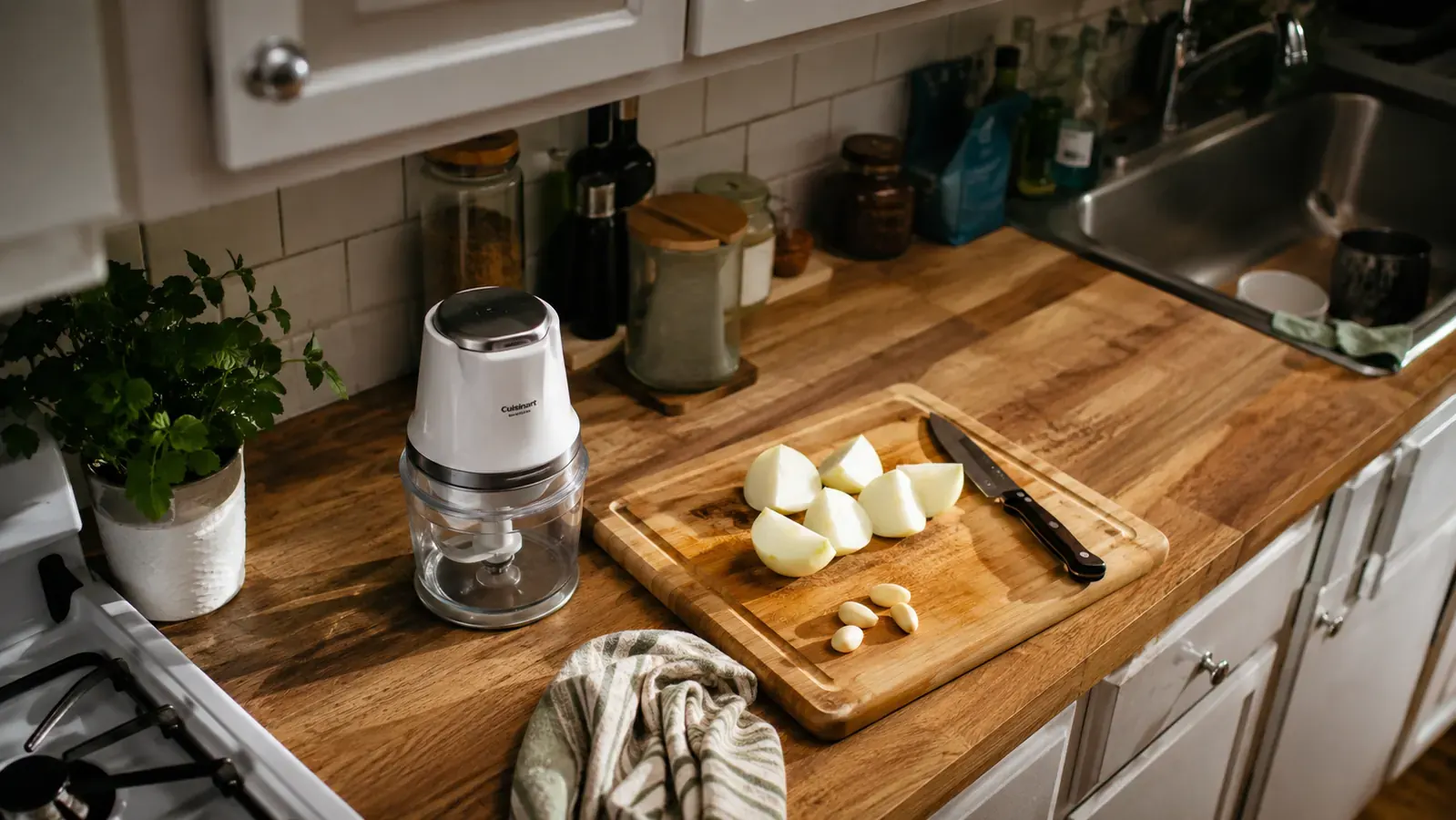
I quarter onions, halve garlic cloves, and break celery or carrots into one-to-two-inch pieces before any of it goes near the chopper. This is the step people skip because it feels like it defeats the purpose of an electric chopper, but the blade only spins in place, it doesn't pull ingredients toward itself the way a full processor's feed tube does. Drop in a whole onion and you'll get a mangled outer layer and a barely-touched core. Rough-cut it first and every piece is close enough to the blade to chop evenly.
Uniform size matters more than small size. I used to cut some pieces tiny and leave others nearly whole out of habit from hand-chopping, and the result was always the same, mush on one end of the bowl and barely-cut chunks on the other. Now I aim for pieces roughly the same size as each other, even if that means a slightly bigger dice going in. The chopper handles the fine work. My job is just to give it a fair, even starting point.
Celery and carrot give the most trouble if you skip this step, since long strings of celery in particular tend to wrap around the base of the blade instead of chopping cleanly. Cutting the stalk crosswise into short pieces first, rather than leaving long lengths, keeps that from happening. Carrot needs a firmer initial cut too, quarter-inch rounds rather than whole peeled carrots, or the blade skates across the surface for the first few presses before it actually bites in.
Step 2: Load the bowl below the fill line, then lock the lid fully
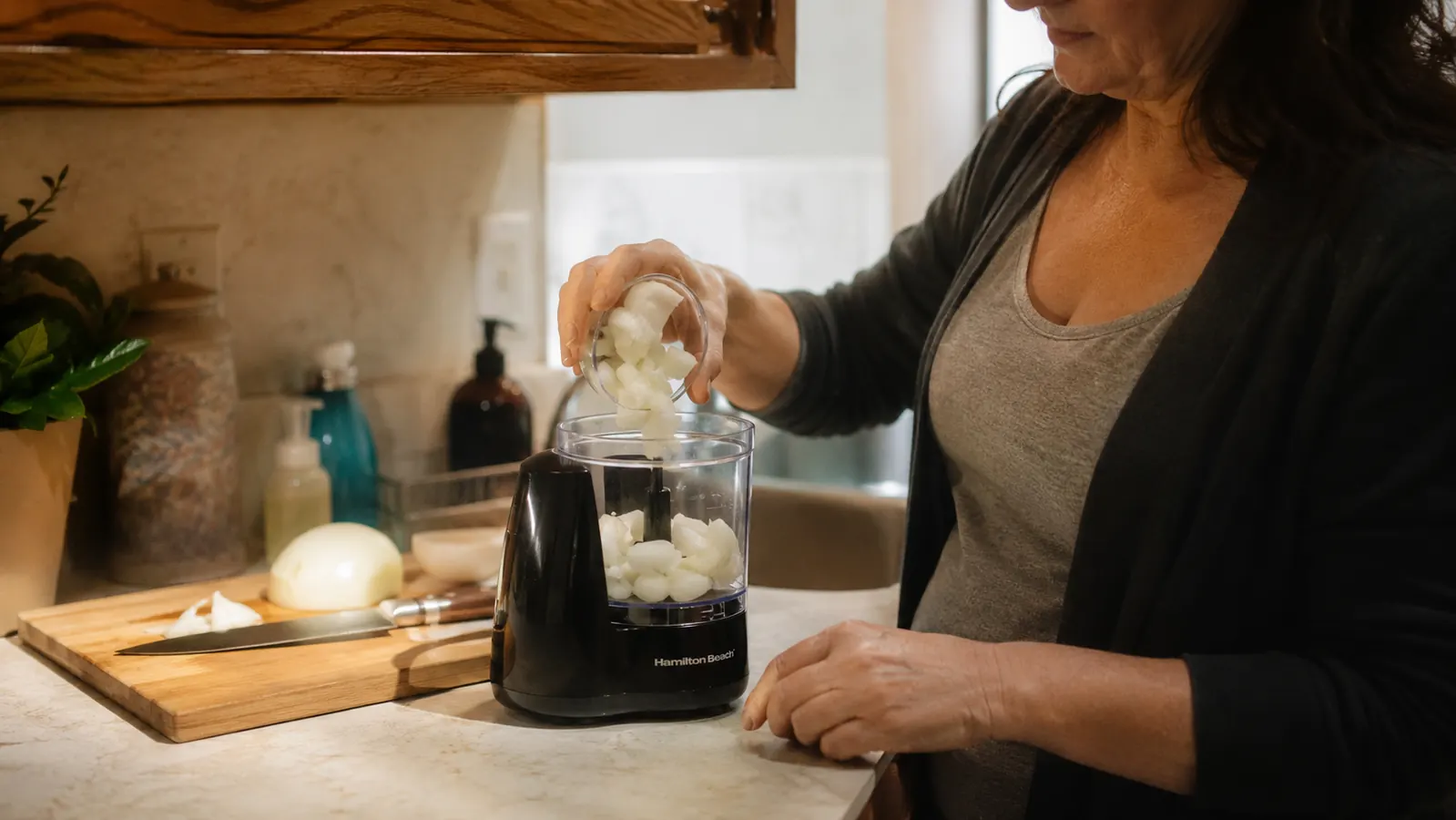
The 3-cup bowl has a real capacity limit, and one full onion fills it close to the top on its own. I load ingredients to no more than about three-quarters of the bowl's height, leaving room for the pieces to actually move when the blade spins instead of jamming against the lid. Overfilling is the single fastest way to get an uneven chop, because the top layer never makes real contact with the blade no matter how many presses you give it.
Locking the lid is a small motion but it has to seat fully, or the chopper won't run at all as a safety feature. I set the lid down and give it a firm quarter turn or press, whatever the specific locking mechanism calls for, and I listen for the click before I press down to run it. A half-locked lid is the most common reason a chopper seems broken when it isn't. It's just waiting for you to finish the step.
Step 3: Press in short bursts, not one long hold
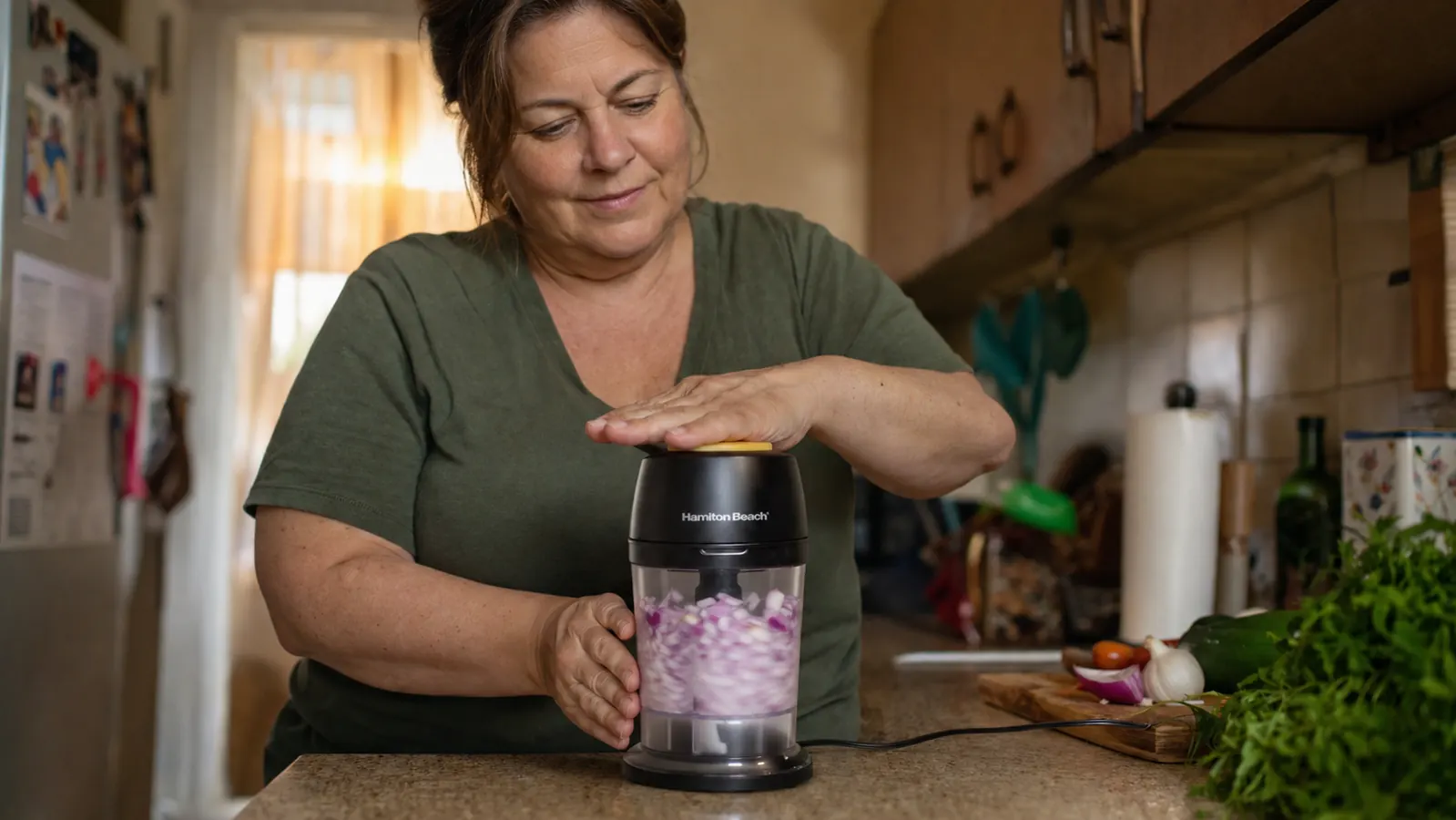
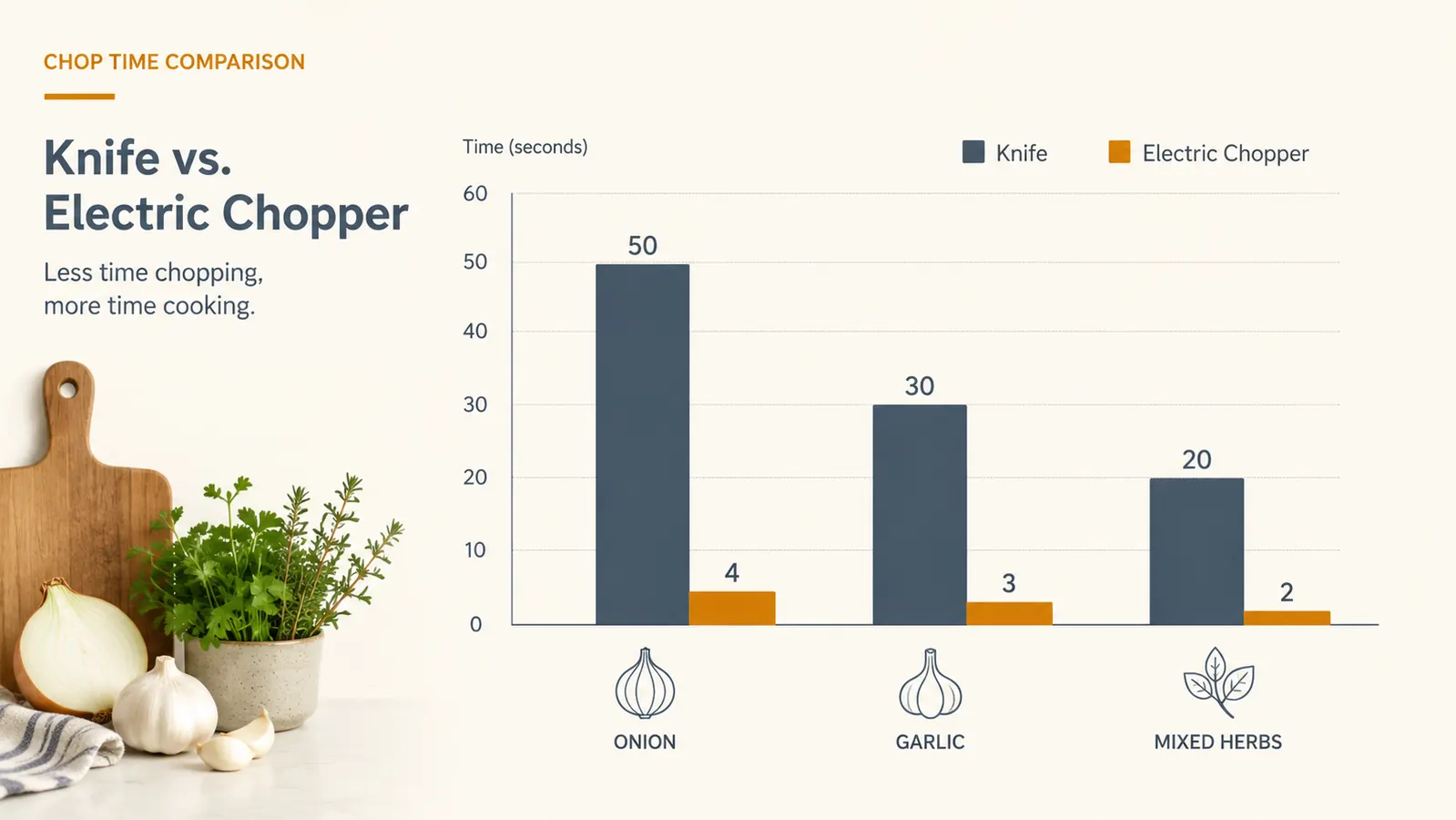
This is the step that actually determines texture, and it's the one I got wrong for the first week I owned this chopper. Six or seven short, sharp presses on the lid gets a fine, even dice on onion or garlic, close to what a mandoline would give me. Hold the lid down continuously for the same amount of time and you'll blow straight past diced into purée territory before you realize it. The blade doesn't know the difference between a fine chop and a paste, only how long it's allowed to spin.
I count my presses out loud now, which sounds silly but keeps me from zoning out and holding the lid a beat too long while I'm thinking about the rest of dinner. Press, release, check the texture through the clear bowl, press again if it needs it. For herbs specifically I use fewer, shorter presses since leaves break down almost instantly compared to a firm onion or a clove of garlic, and a few seconds too long turns basil into a dark, bruised paste instead of a bright, rough chop.
When I'm working with a vegetable I haven't chopped in this bowl before, I stop after the third press and actually lift the whole bowl up to eye level instead of guessing by press count alone. Every vegetable behaves a little differently under the blade. Bell pepper turns from chunky to nearly liquid faster than onion does because of the water content, so a chop that would be perfect for onion at press five is already too far gone for pepper by press four.
Step 4: Batch by volume and by ingredient, don't mix a big job into one load
If a recipe calls for two onions, I run two separate batches rather than trying to force both into one load. It costs maybe forty extra seconds total, dumping the bowl and reloading, but it's still faster than hand-chopping two onions and it keeps every piece the size I actually want instead of some pieces over-processed while the bowl works through the excess volume.
I also don't mix ingredients with very different textures in the same load unless I want them blended into each other, which is sometimes exactly the point, like a quick salsa where tomato, onion, and jalapeno all go in together on purpose. But if I want a clean onion dice for a soup base and minced garlic separately for the same pot, those are two batches, not one. Garlic releases oil fast under the blade, and if it's mixed in with onion from the first press, the whole batch turns sticky and clumped instead of loose and even.
Order matters too when I'm doing a full prep session for a recipe with several vegetables. I run the driest ingredients first, onion and garlic, then anything wetter like tomato or celery, and I save herbs for last since they're quickest to over-process and I don't want bits of garlic smell lingering in a batch of basil. A quick wipe of the bowl with a paper towel between very different ingredients keeps flavors from carrying over, faster than a full rinse and dry between every batch.
On Sundays I'll double a batch of onion and garlic on purpose, even if I only need half of it for that night's dinner, then portion the extra into a small container in the fridge for the next two or three days of cooking. It's still two runs through the bowl either way, so I might as well get a second meal's worth of prep done while I'm already standing there with the chopper out and my hands smelling like onion regardless.
Step 5: Empty the bowl fully, then rinse it before the next batch, not after all of them
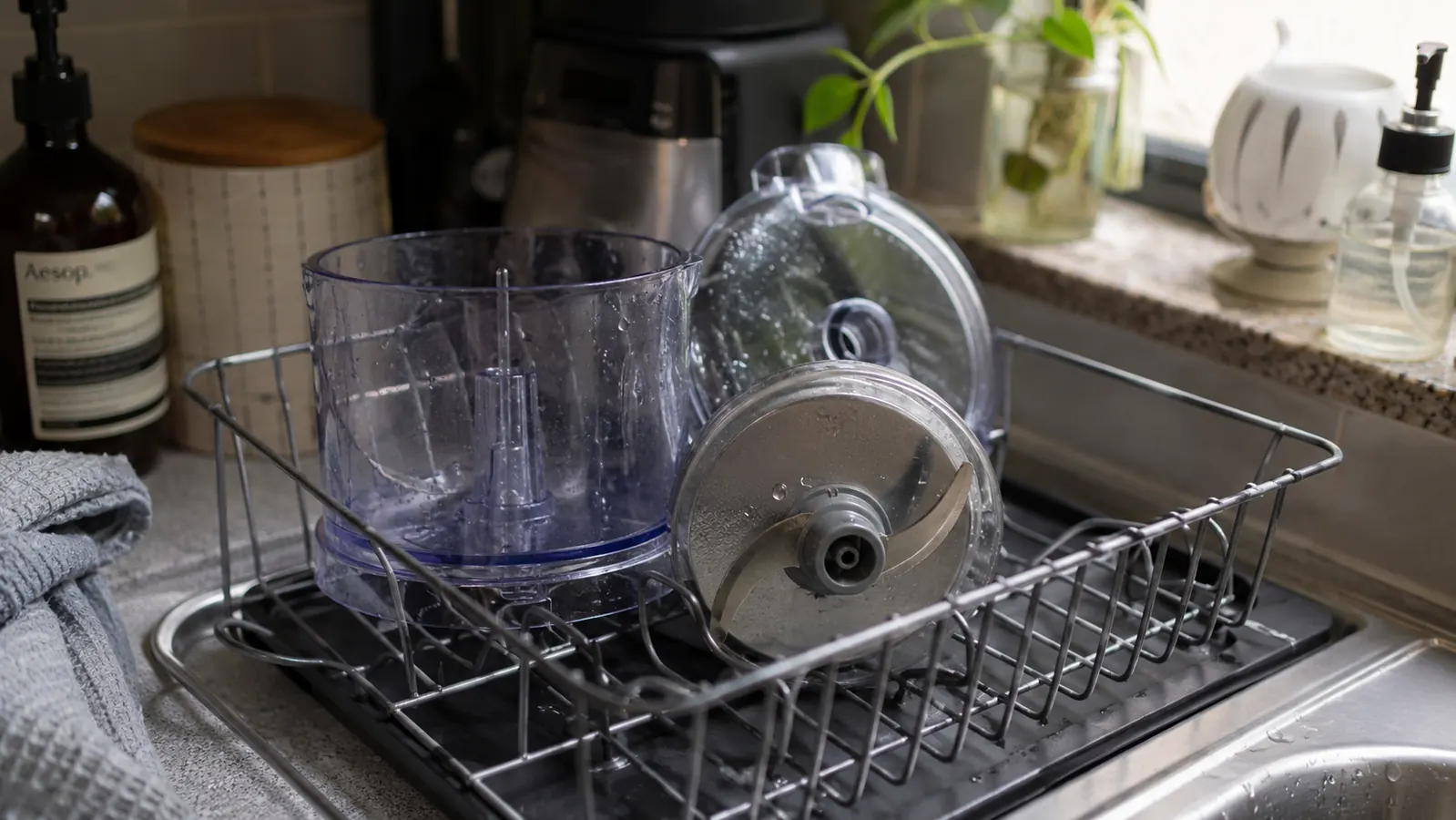
I unlock the lid, lift the blade assembly out first since it sits loose in the bowl, then tip the bowl straight into whatever pan or dish is waiting. A silicone spatula gets the last bit stuck against the walls, which matters more than it sounds like on a 3-cup bowl where a tablespoon of unscraped onion is a real percentage of the batch. Skipping this step is how I used to lose a noticeable chunk of every chop to the sides of the bowl.
For back-to-back batches in one cooking session, I give the bowl and blade a fast rinse under hot water rather than waiting to run everything through the dishwasher at the end. It takes ten seconds and keeps flavors from bleeding between batches, garlic into herbs, jalapeno into onion for a milder dish later. Everything is dishwasher-safe when I'm actually done cooking for the night, but that quick rinse mid-session is what keeps the whole routine moving instead of stalling out waiting for a full wash between every ingredient.
What Else Helps
Keeping the Hamilton Beach out on the counter during an actual cooking session, rather than lifting it down from the cabinet mid-recipe, saves more time than any single technique above. It weighs a little over two pounds, so pulling it out and setting it back only takes a few seconds, but that few seconds adds up if you're stopping to fetch it for every vegetable in a recipe with five of them. I set it next to my cutting board before I start prepping anything and put it away only once the whole meal is done.
A small silicone spatula earns its own spot in the drawer right next to the chopper. It's the fastest way to scrape the bowl clean between batches and it fits into the corners a regular spoon can't reach. I also keep a short list of what I don't bother running through the chopper anymore, hard cheese, ice, anything meant to end up smooth like nut butter, since the single blade handles those unevenly no matter how I load or press it. Sticking to onion, garlic, soft vegetables, and herbs is where this method actually earns the time it saves.
The cord is short, about eighteen inches, so I make sure the outlet I'm working near is within reach before I start rather than mid-recipe with wet hands. My outlet sits directly behind my prep spot, which has never been an issue, but it's worth checking your own setup before you build a whole routine around this chopper sitting somewhere specific.
The bowl is small on purpose. Once I stopped fighting that and started batching around it, the whole routine got faster instead of slower.
Stop losing ten minutes to onions every night
This is the exact loading and pressing routine that got my vegetable prep down to under a minute most nights. Check today's price and current availability before your next cooking session.
Amazon Check Today's Price on Amazon →