

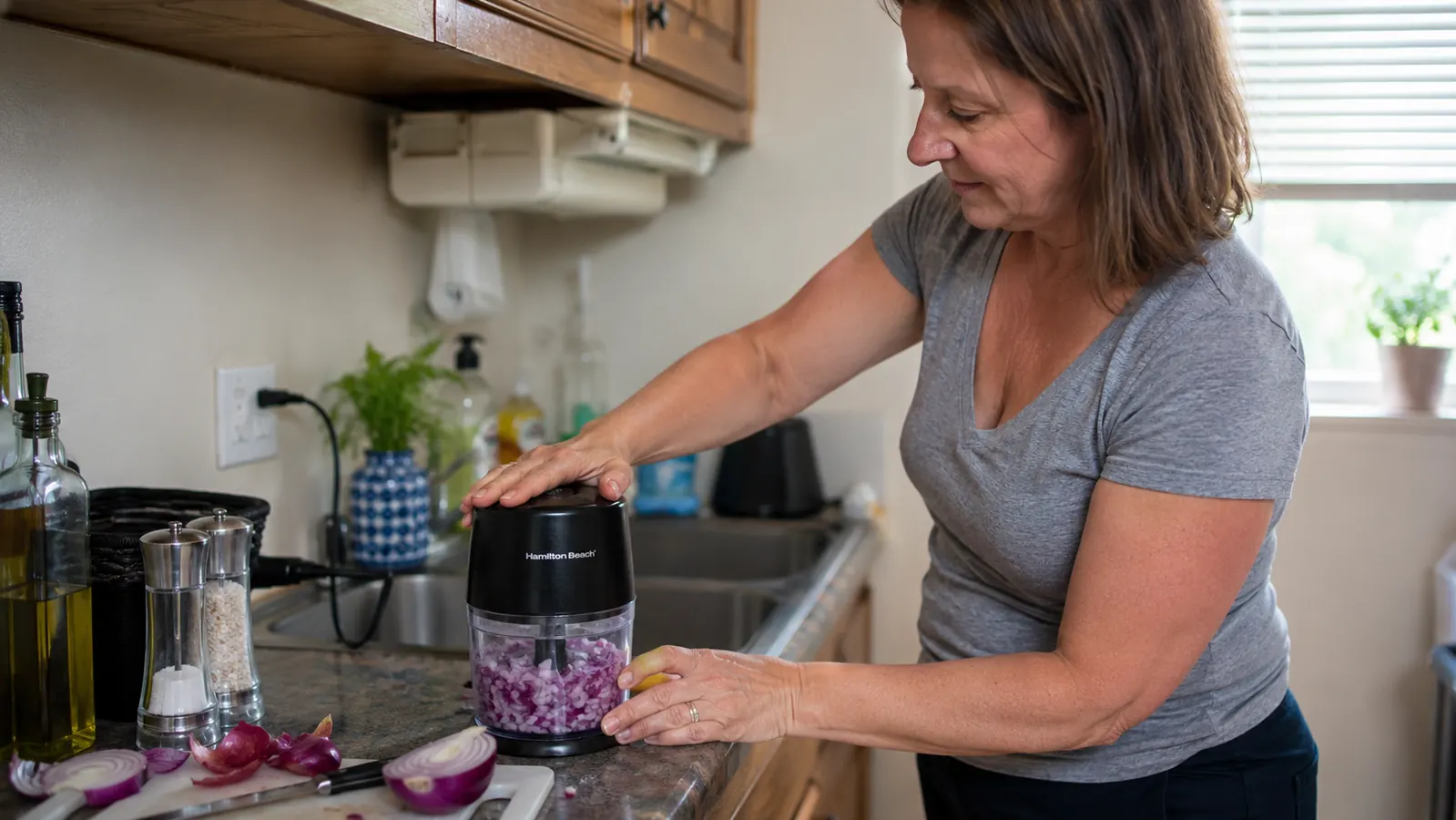
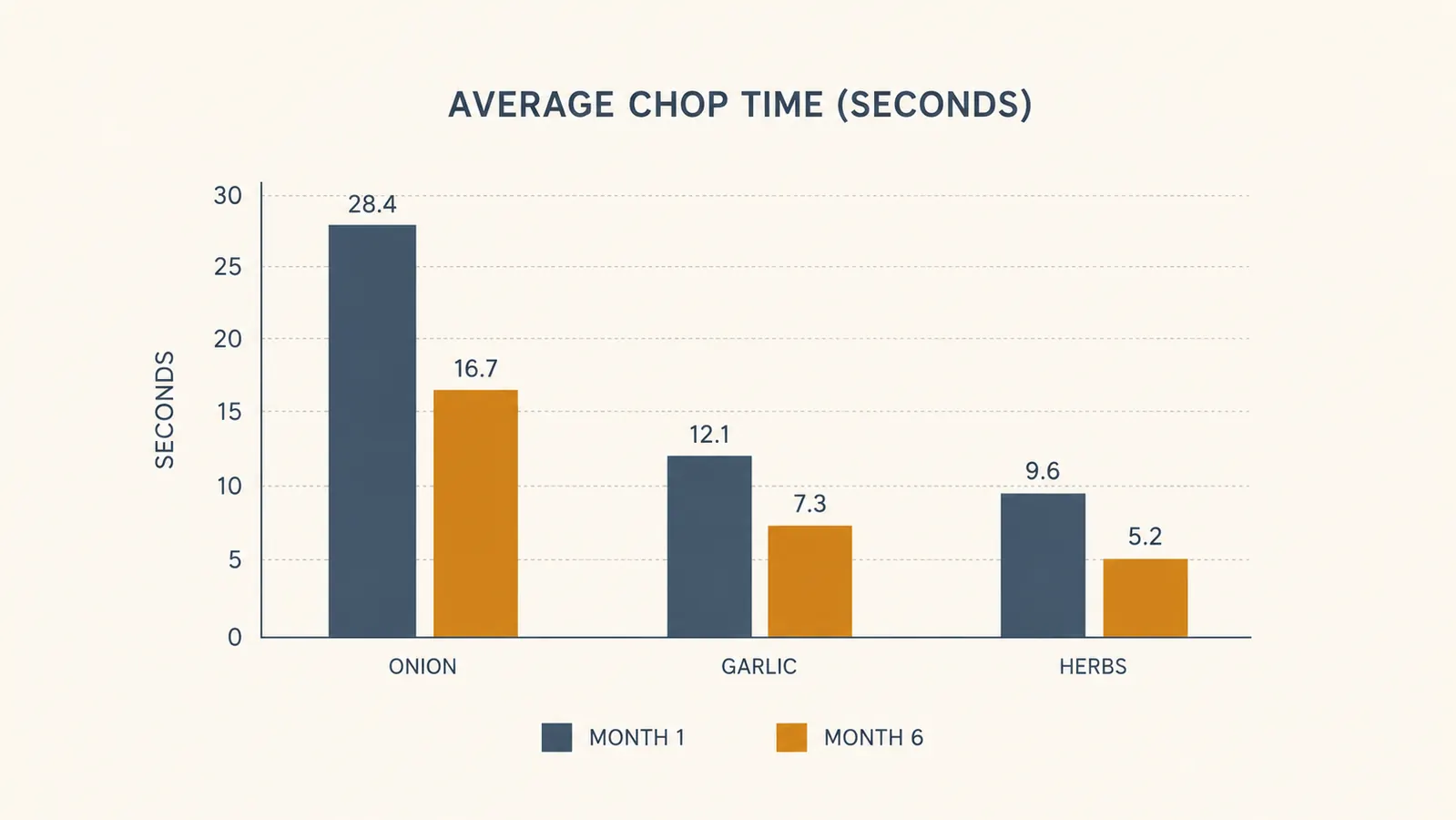
The Hamilton Beach 3 Cup Electric Vegetable Chopper has sat on the same stretch of counter next to my cutting board since February, and half a year of onions, garlic, salsa, and pesto later, I can tell you exactly why it stayed there instead of ending up in the cabinet under my sink with the last two chopping gadgets I bought. My kitchen gives me one run of counter, about seven feet from the sink to the stove, no island, no extra prep table. Every appliance on that counter has to justify its footprint daily or it gets boxed up for the next donation run. This one earns its keep because it does the one job I hated most, dicing an onion without crying through it, in about fifteen seconds instead of five minutes with a knife.
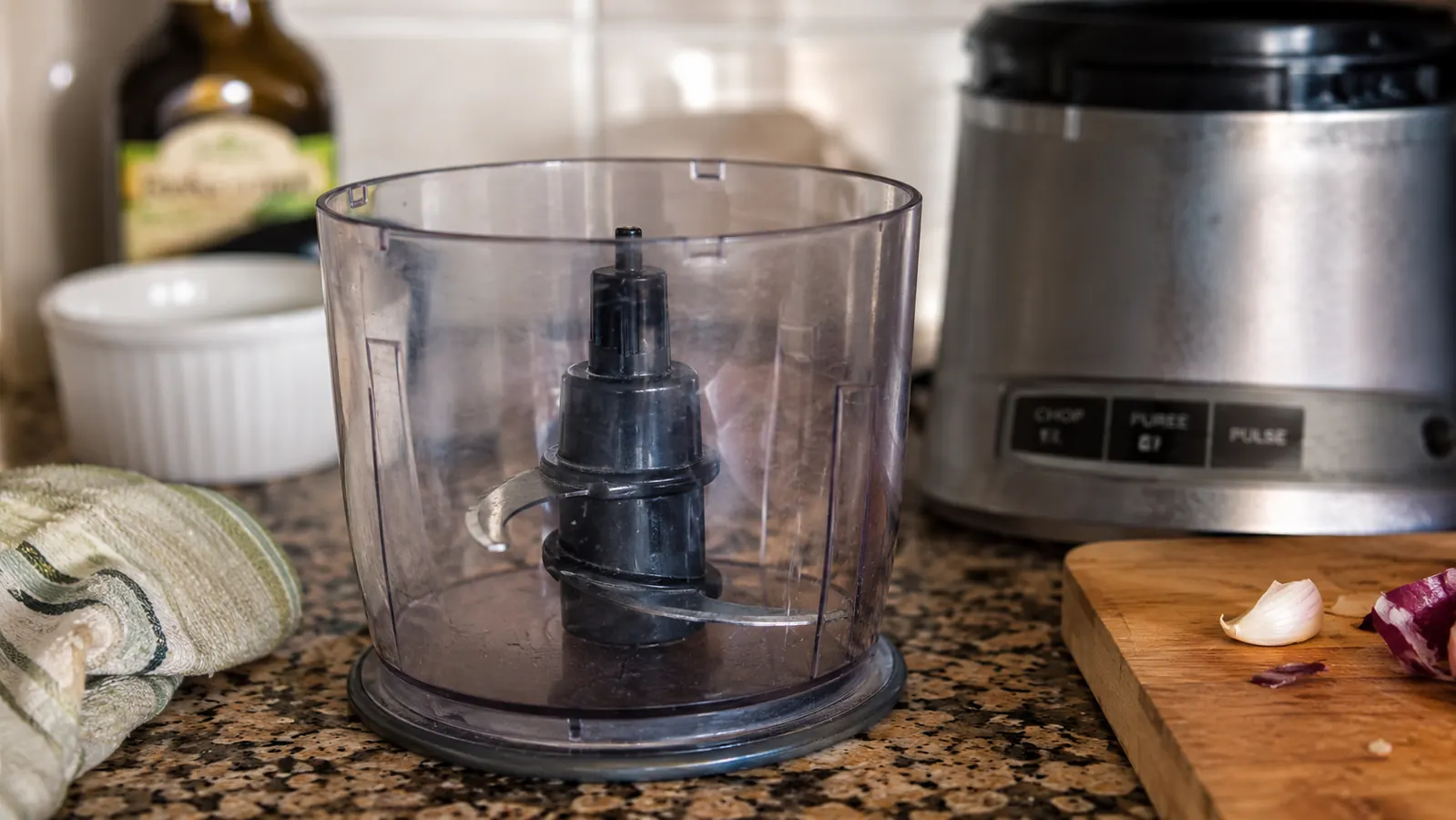
At today's price, the Hamilton Beach is one of the cheapest electric appliances in my kitchen, and it looks the part: a clear plastic bowl, a small stainless steel blade, a white motor base with a cord that wraps underneath. There's no dial, no digital display, no speed settings. You lock the lid, press down on it, and the blade spins for as long as you're pressing. Let go and it stops. I was skeptical that something this simple would hold up to daily use, but after six months of near-nightly onion and garlic prep, I've got a clear read on where it earns its 4.5-inch square footprint and where it falls short.
The Quick Verdict
A genuinely small, genuinely useful chopper for daily onion, garlic, and herb prep, if you accept its 3-cup bowl means you're doing two batches for anything bigger and its single blade won't replace a full food processor.
Amazon Check Today's Price →Still tearing up over a cutting board every night?
This chopper replaced my nightly knife work for onion, garlic, and herbs in under twenty seconds a batch. See today's price and current availability before you decide.
Amazon Check Today's Price on Amazon →How I've Used It Over Six Months
In a typical week I run this chopper five or six times: onion and garlic for whatever I'm cooking that night, a Sunday batch of salsa when tomatoes are in season, and every couple of weeks a small batch of pesto or a nut chop for baking. It replaced the mini prep knife I used to keep just for onions, and it replaced the eye-watering ten minutes I used to spend mincing garlic by hand, which I did badly and unevenly no matter how sharp the knife was.
The operation is as simple as it looks. Peel and quarter an onion, drop the pieces in the 3-cup bowl, lock the clear lid on, and press straight down with the flat of my palm. Six or seven short presses gets a fine, even dice, closer to what I'd get from a mandoline than a knife. Ten presses and it starts turning to mush, so timing the presses matters more than I expected going in. I learned that in the first week and haven't over-chopped an onion since.
The 3-cup bowl is the real limiting factor, and it's also the reason the whole thing stays small enough to earn its spot. One full onion fills it close to the top line. Two onions for a bigger pot of chili means running it twice and dumping the bowl in between, which takes maybe forty extra seconds. That's still faster than hand-chopping two onions, so it doesn't bother me, but if you're regularly cooking for six or more people, that second batch adds up.
The Footprint: What 4.5 Inches Actually Gets You
I measured before I bought this, because I've made the mistake before of ordering a countertop gadget that looked small in photos and turned out to eat a whole corner of counter. The base of this chopper is 4.5 inches square, and with the lid locked on it stands about 8.7 inches tall, closer to a coffee mug's footprint than an appliance's. My upper cabinet sits fourteen inches above the counter, so it clears easily, but I still pull it forward about six inches from the wall so I have room to press straight down with my palm without my knuckles catching the cabinet edge.
It weighs a little over two pounds, light enough that I keep it in the cabinet next to my stove rather than leaving it out permanently, and lifting it down and setting it back takes maybe five seconds. That's the honest answer to whether it counts as counter appliance or cupboard appliance in my kitchen: it's a cupboard appliance that comes out almost every day, which in my book is the best kind. It doesn't demand a permanent spot the way a full-size food processor would, but it's grabbable enough that I actually use it instead of reaching for a knife out of laziness.
The cord is short, about eighteen inches, which keeps it from tangling with anything else on the counter but also means it needs an outlet within reach of wherever it's sitting. My outlet is directly behind where I prep, so this has never been an issue, but I'd think twice about this one if your only free outlet is across the kitchen from your cutting board.
Chopping Power: What the Blade Actually Handles
The single stainless steel blade is sharp enough to handle onion, garlic, celery, carrots, and soft herbs without a fight. Garlic is where it genuinely outperforms a knife for me. Three or four cloves, a few short presses, and I get a consistent mince without the sticky fingers and the smell that lingers on my cutting board for a day. Fresh herbs like cilantro and parsley chop clean too, though I strip the stems first since tough stems tend to wrap around the blade instead of cutting.
Where it struggles is anything genuinely hard or genuinely large in volume. I tried it on ice once out of curiosity and the blade just skated across the cubes without breaking them down, so this isn't a substitute for a blender if you're making frozen drinks. Hard cheese comes out shredded unevenly rather than diced, more like clumps than the clean cubes I get with vegetables. And a full cup of raw almonds for pesto takes nearly a full minute of pressing, with some pieces staying larger than others by the time the rest turns to near-butter.
Salsa is the test I run most often in summer, and it's the job this chopper handles best. Quartered tomatoes, a chunk of onion, a jalapeno, a handful of cilantro, run in two short batches because of the bowl size, then combined in a serving bowl with lime and salt stirred in by hand. The texture comes out chunky rather than pureed, which is exactly what I want from salsa and exactly what a full-size food processor tends to over-process if I'm not watching it closely.
Daily Use: What It Replaced and What It Didn't
The Hamilton Beach fully replaced my nightly onion and garlic prep, and it mostly replaced the small handheld chopper I used before, the kind with a pull cord on top that always needed both hands and still left uneven pieces. It did not replace my food processor for anything I don't own one, but I want to be honest that it's not a food processor substitute for people who do heavier baking or cooking. There's no dough blade, no shredding disc, no slicing disc, just the one S-blade for chopping and mincing.
Nut butter is the one job I keep testing and keep giving up on. A cup of peanuts will turn into a chunky, crumbly paste after two or three minutes of pressing in short bursts, letting the motor rest between presses so it doesn't overheat, but it never gets to the smooth, spreadable consistency a real food processor manages. I've stopped trying and just buy peanut butter now, which is probably the right call for an appliance this small anyway.
Where it's become genuinely indispensable is the small, repetitive jobs that used to feel like a chore: mincing garlic for a weeknight stir-fry, dicing onion for tacos, chopping walnuts for a batch of muffins, breaking down fresh basil and pine nuts for a quick pesto sauce that I thin with olive oil afterward. None of these are dramatic uses. All of them are the kind of five-minute task that adds up to real time saved across a week of actual cooking.
What's Held Up After Six Months (and What Hasn't)
The blade is still sharp enough to mince garlic cleanly, which surprised me a little given how often it's gone through the dishwasher. The motor still spins at the same speed it did on day one, no bogging down, no burning smell even after back-to-back batches of a big salsa order. The base has never once slid on my counter, which matters more than it sounds like it should when you're pressing straight down with real force.
The plastic bowl shows the most wear. It's picked up fine scratches from six months of onion and carrot dicing, cloudy in a way that's cosmetic rather than functional, but noticeable if you hold it up to the light. The rubber gasket around the lid has loosened slightly, and I've had two or three presses where a bit of liquid escaped around the seal instead of staying contained, always with wetter ingredients like tomato rather than dry ones like nuts or garlic.
The one real complaint is the lid lock, a small plastic tab that clicks the lid into place before the blade will spin as a safety feature. It's developed a slight looseness, and about once a week I have to press and reseat the lid a second time before it engages. It hasn't failed outright and the blade has never spun without the lid properly locked, but I notice the extra step now where I didn't in month one, and I'll be watching it going into year two.
Alternatives I Considered First
Before buying this, I seriously considered just doing prep by hand and buying a genuinely good chef's knife instead. I own a good knife. It still doesn't stop onion fumes from making my eyes water, and it still takes real time to get a fine, even mince on garlic, time I don't always have on a Tuesday night after work. An inexpensive appliance that solves both problems in under twenty seconds was an easy trade once I actually priced out my own time.
I also looked at a step up to a full mini food processor with multiple blade attachments and a slightly larger bowl, including the kind of model I compare this one against elsewhere on this site. The extra attachments are real, and the bigger bowl means fewer second batches for a big pot of chili. But the footprint runs larger, the price runs higher, and for the specific jobs I actually do most nights, onion, garlic, herbs, a quick salsa, this smaller and simpler chopper did what I needed without asking for more counter or cabinet space than I have to give.
What I Liked
- Genuinely compact at 4.5 inches square, easy to store in a cabinet and pull out daily
- Onion and garlic mincing takes seconds instead of minutes, no tears
- No dial or speed settings, press-to-run design is simple enough for anyone
- Dishwasher-safe bowl, lid, and blade make cleanup fast
- Handles salsa, pesto, and herb chopping with genuinely chunky, controllable texture
Where It Falls Short
- 3-cup bowl means a second batch for anything bigger than one onion
- No dough, shredding, or slicing attachments, this is a chopper, not a full processor
- Struggles with hard cheese, ice, and smooth nut butters
- Lid lock tab has loosened slightly after six months of daily use
It was never going to replace a full food processor, but it ended six months of crying over onions on a Tuesday night, and that alone earned it a permanent spot in my cabinet.
Who This Is For
The Hamilton Beach is the right chopper for a small kitchen where the counter or cabinet space is genuinely tight and the appliance has to earn its keep on the most repetitive, most annoying part of daily cooking: onion, garlic, and herb prep. If you're cooking for one or two people, hate the tears and the smell of hand-mincing garlic, and want something you can wash in the dishwasher and tuck away in seconds, this fits the job well. It's also a solid fit for a first apartment, a dorm-adjacent kitchen, or an RV galley where a full-size food processor simply won't fit anywhere.
Who Should Skip It
If you're cooking for a family of four or more and regularly need to chop enough onion or vegetables to fill more than one bowl at a time, the constant second-batching will wear on you faster than it wore on me. If you bake often and want dough or shredding attachments, or you make smooth nut butters or hummus regularly, step up to a full mini food processor instead. And if you're set on multiple speed settings rather than a simple press-to-run design, this one's simplicity will feel limiting rather than convenient.
One appliance, one job, done in under twenty seconds
Six months in, this is still what I reach for every time an onion or a clove of garlic hits my cutting board. If your counter has room for one small chopper, check today's price before it changes.
Amazon Check Today's Price on Amazon →