
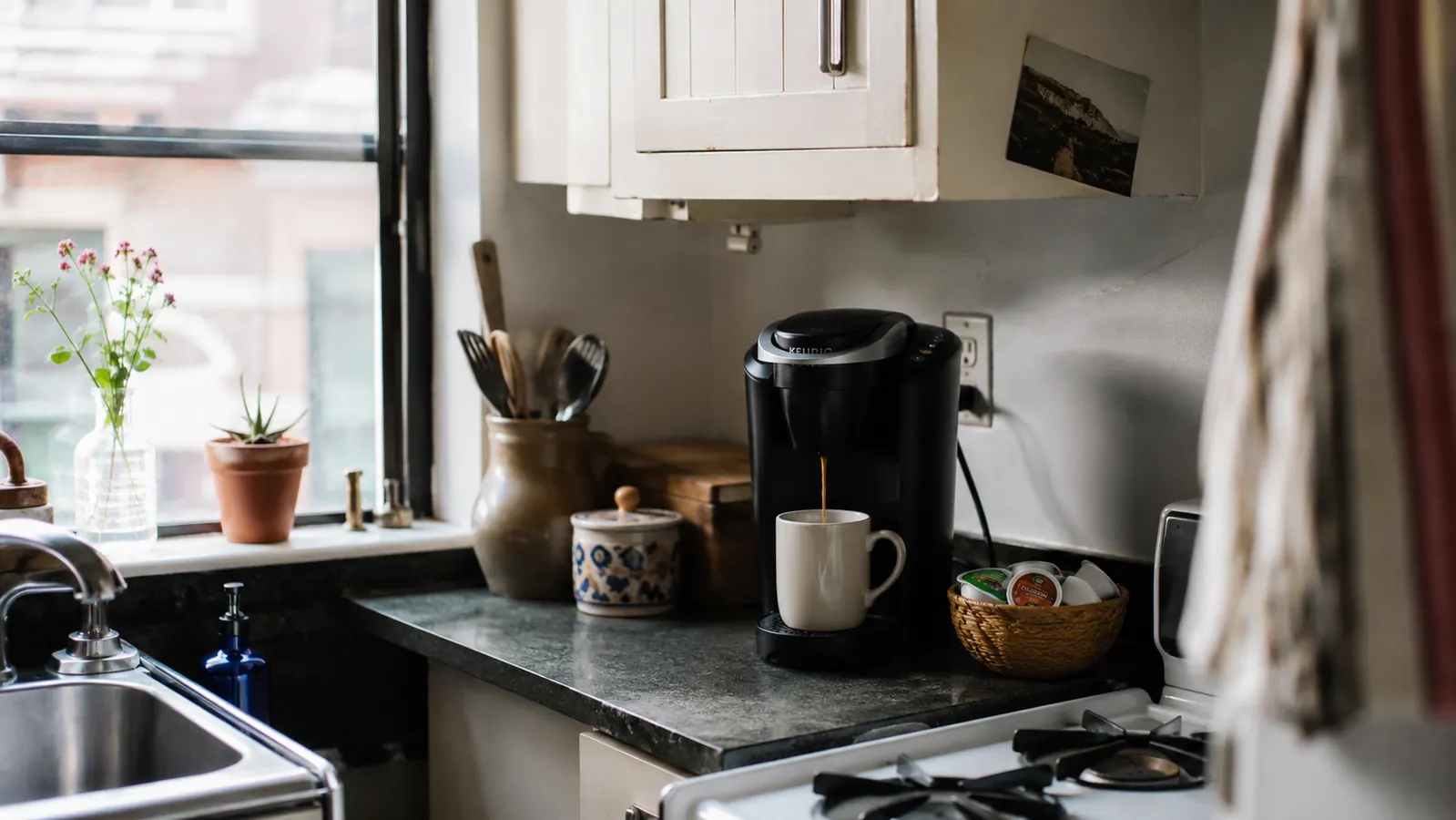
My kitchen is one run of counter, about nine feet from the sink to the stove, and until six months ago a solid third of it was taken up by a twelve-cup drip coffee maker I was pulling maybe four cups out of on a good day. The rest sat in the carafe going bitter until I dumped it out that evening, which is its own small waste I'd stopped thinking about until I did the math. Six months ago I replaced it with the Keurig K-Express, a single-serve pod machine that's about as wide as a hardcover book standing on its spine, and it hasn't moved off the counter since.
The short version: it earns its spot every single morning, which is more than I can say for the drip machine it replaced by month three. But "earns its spot" isn't the same as "perfect for everyone," and I want to walk through what six months of actual daily use looks like, not just the first two weeks when every new appliance feels like a revelation.
The Quick Verdict
A genuinely narrow single-serve coffee maker that earns its counter space in a tight kitchen, with brew strength that's fine for daily coffee but underwhelming for anyone used to real espresso, and a pod cost that adds up faster than the sticker price suggests.
Amazon Check Today's Price →Wondering if a single-serve machine can actually replace your drip pot?
Check today's price and current availability on Amazon before you decide what's earning your counter space.
Amazon Check Today's Price on Amazon →How I've Used It
I run the Keurig once, sometimes twice, every morning, plus an afternoon cup on the days I'm working from my kitchen table instead of an office. That's the whole use case for me: I live alone, I don't entertain often, and a full pot of coffee has always meant either drinking too much of it out of guilt or pouring most of it down the sink by nine a.m. A single-serve machine matches how I actually drink coffee, which is one cup at a time, on demand, not on a schedule set by whoever brewed the pot.
The K-Express gives you three brew sizes, 8, 10, and 12 ounces, plus a Strong button that extends the brew time to pull more flavor out of the same pod. I use the 8-ounce Strong setting almost exclusively. It's not a full-size mug, but it's close enough, and I've learned that stretching a pod across 12 ounces just waters everything down until it tastes like coffee-flavored warm water. If you like a bigger mug, know going in that the pod isn't sized for that without some flavor tradeoff.
It sits on the counter between my toaster and the wall, in a gap that a standard drip machine or a bulkier pod system simply wouldn't fit into. I measured before I bought it, which I now do for every appliance after getting burned once by a toaster oven that looked compact in photos and turned out to eat half my counter in real life. The reservoir holds enough for about six cups before I need to refill it, which for one person is most of a week between top-offs.
The Footprint, Measured
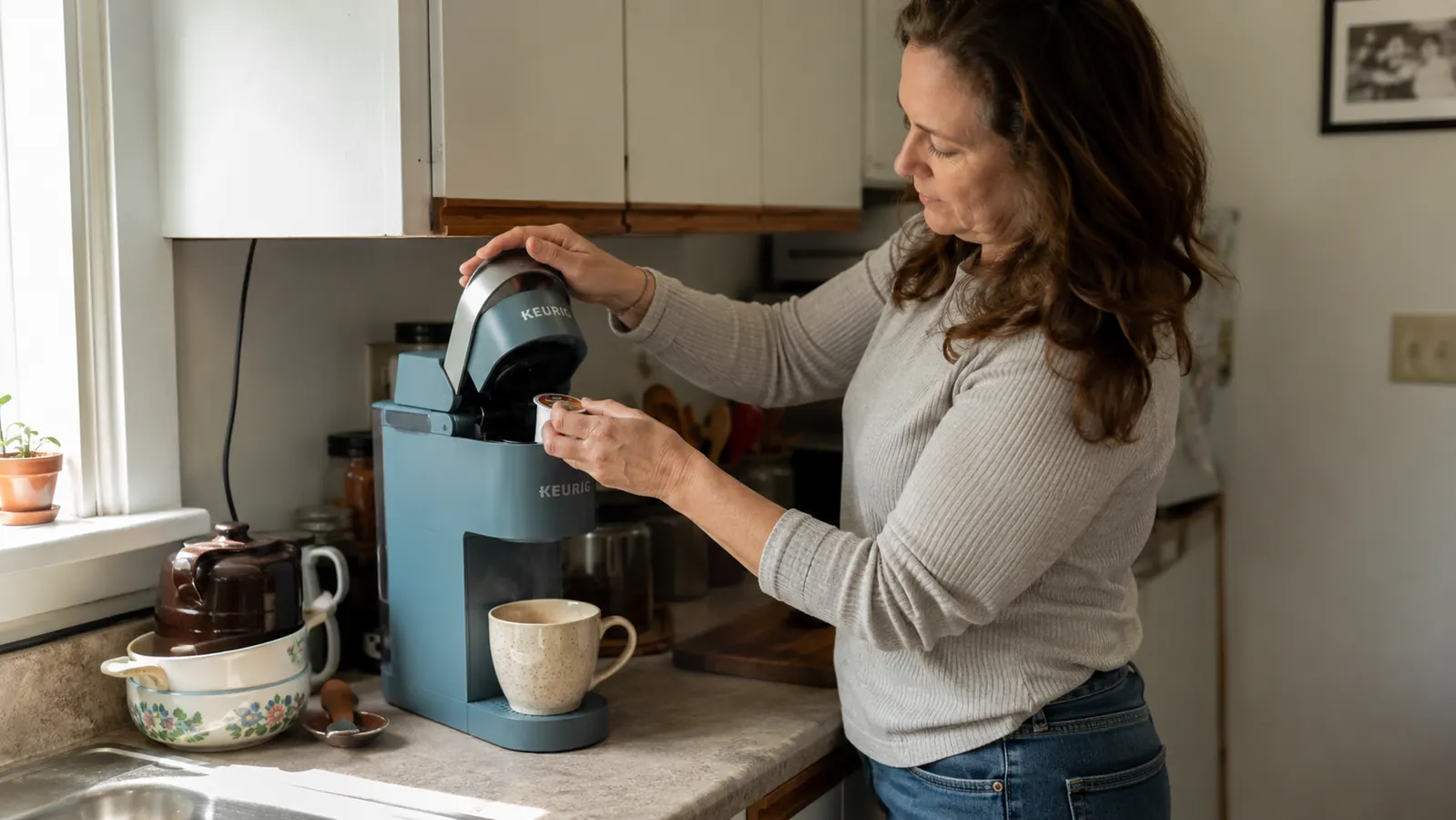
This is the part most coffee maker reviews skip entirely, and it's the actual reason anyone in a small kitchen is reading this instead of a general buying guide. The unit is roughly 4.7 inches wide, 13 inches deep, and about 12.6 inches tall with the reservoir lid closed. That width is the whole story. It's narrow enough to slide into gaps that would swallow a wider drip machine, and it clears my upper cabinets with a couple of inches to spare, so I never have to lift it down from a shelf before I use it.
I want to be honest that the depth matters just as much as the width and gets mentioned far less. At 13 inches deep, it sticks out further than you'd expect from how narrow it looks in photos, and I had to shift my knife block six inches to the left to give it enough clearance to fully open the top lid for loading pods. If your counter is deep as well as narrow, this won't be an issue. If you've got a shallow counter with an outlet mounted low on the backsplash, measure the depth specifically before you order, not just the width.
For comparison, the drip machine it replaced measured close to 10 inches wide and 8 inches deep, but with a permanent carafe sitting next to it on a warming plate that added another six inches of dead space I couldn't use for anything else. The K-Express, even with its extra depth, ends up taking less total counter real estate once you account for the fact that nothing else has to sit beside it. There's no carafe, no warming plate, no second footprint to plan around.
Brew Quality Over Six Months
Coffee out of the K-Express is consistent, which after six months of daily use is the thing I've come to value most. Every cup on the Strong setting tastes close to identical to the one before it, no scorched batches, no weak ones from a filter that clogged unevenly. That consistency is a real upgrade from the drip machine, where the last cup of a pot always tasted burnt from sitting on the warming plate for an hour.
That said, it is not strong coffee in the way a French press or a moka pot gets you strong coffee. The Strong button lengthens the extraction time, which helps, but I've still had mornings where I wanted something closer to a real double shot and ended up drinking two 8-ounce cups back to back instead. If you're coming from a drip machine, the jump feels fine. If you're coming from anything closer to espresso, temper your expectations before you buy.
Pod quality varies more than I expected going in. The Keurig-brand pods are reliably decent. A cheaper off-brand multipack I tried around month three brewed noticeably thinner and left more grounds sediment at the bottom of the mug than I liked. I've since settled on two pod brands I trust and stopped experimenting, which has made the whole routine faster and more predictable, but it did take some trial and error to get there.
Pod Cost and What It Actually Runs
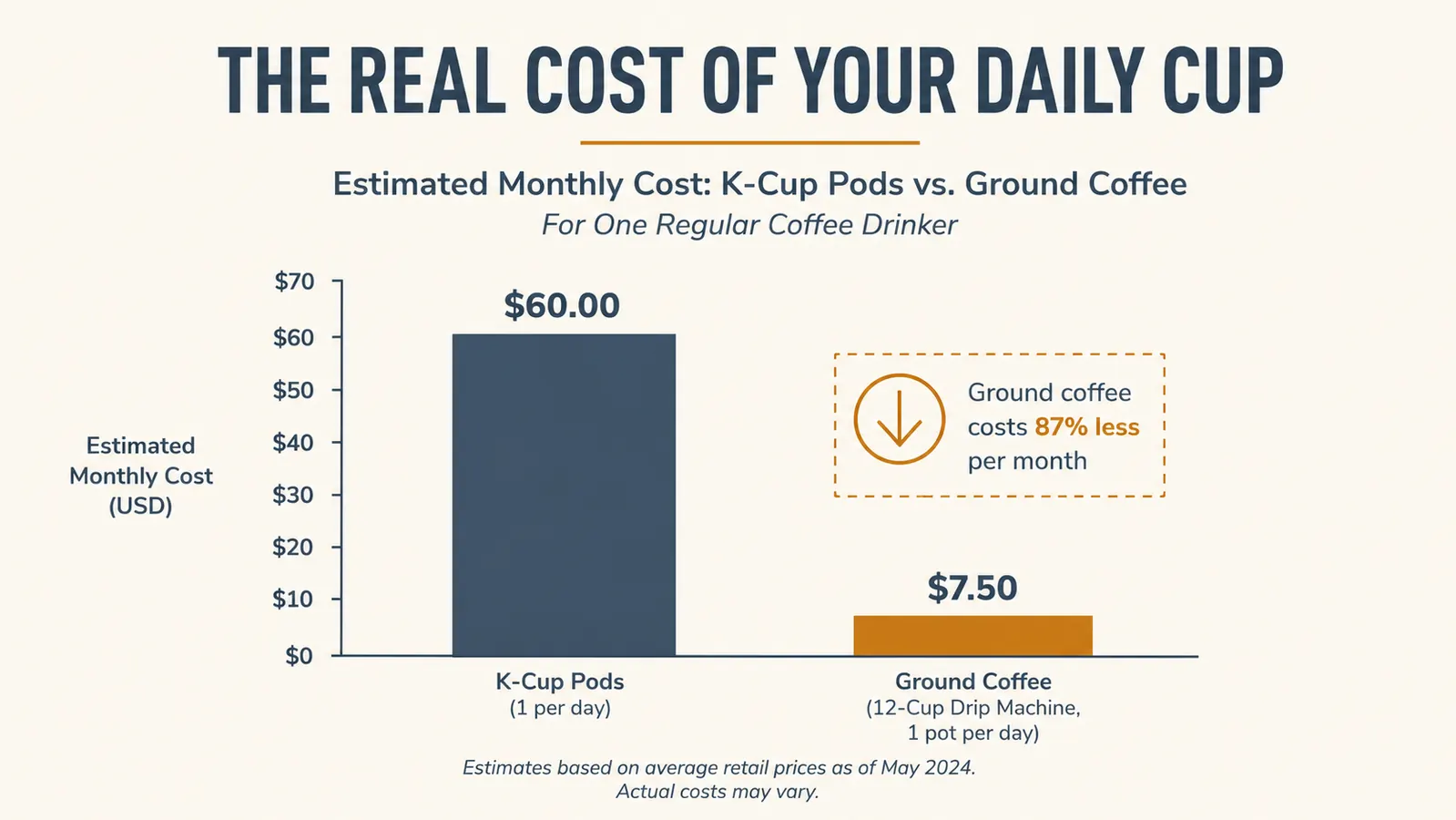
This is the part I wish someone had walked me through before I bought it. A box of 24 K-Cup pods runs somewhere in the neighborhood of a good bag of ground coffee that would have made me 30 to 40 cups in the old drip machine. Per cup, single-serve pods cost noticeably more than ground coffee brewed at home, even accounting for the coffee I used to waste pouring out half a pot most evenings.
For me, drinking one to two cups a day, the math still works out in the machine's favor once you factor in the coffee I was throwing away before. If I were making four or five cups a day, the pod cost would have started to sting in a way the convenience wouldn't offset. I track it loosely now, and I land somewhere around ten to fifteen dollars a month more than I was spending on ground coffee, which for me is worth it, but it's a real number worth running for your own habits, not just the machine's upfront price.
The reusable filter cup that came in the box, which lets you use your own ground coffee instead of a pod, has sat in a drawer since month one. I tried it twice, the brew came out weaker than a pod, and cleaning it every use turned into more work than the pods save me in convenience. If your plan is to buy this and mostly use your own coffee, know that the machine is really built around the pod format, and the workaround feels like an afterthought.
Upkeep and Descaling
The reservoir is removable and easy to rinse out, and I do that about once a week to keep it from developing that stale-water smell that hits any water container left sitting in a warm kitchen. The drip tray underneath the spout lifts out for washing and holds a small amount of overflow if a pod brews unevenly, which happens occasionally, maybe once every couple of weeks, usually from a pod that wasn't seated quite right before I closed the lid.
Descaling is the maintenance task that actually matters and the one I almost skipped. The machine has an indicator light that comes on when it's time, and I ignored it for two extra weeks the first time around, at which point the brew started coming out noticeably slower and the coffee tasted faintly metallic. A descaling solution and about twenty minutes of running water through empty cycles fixed it completely. I now do it every three months on a calendar reminder instead of waiting for the light, and the machine has run consistently since.
Alternatives I Considered
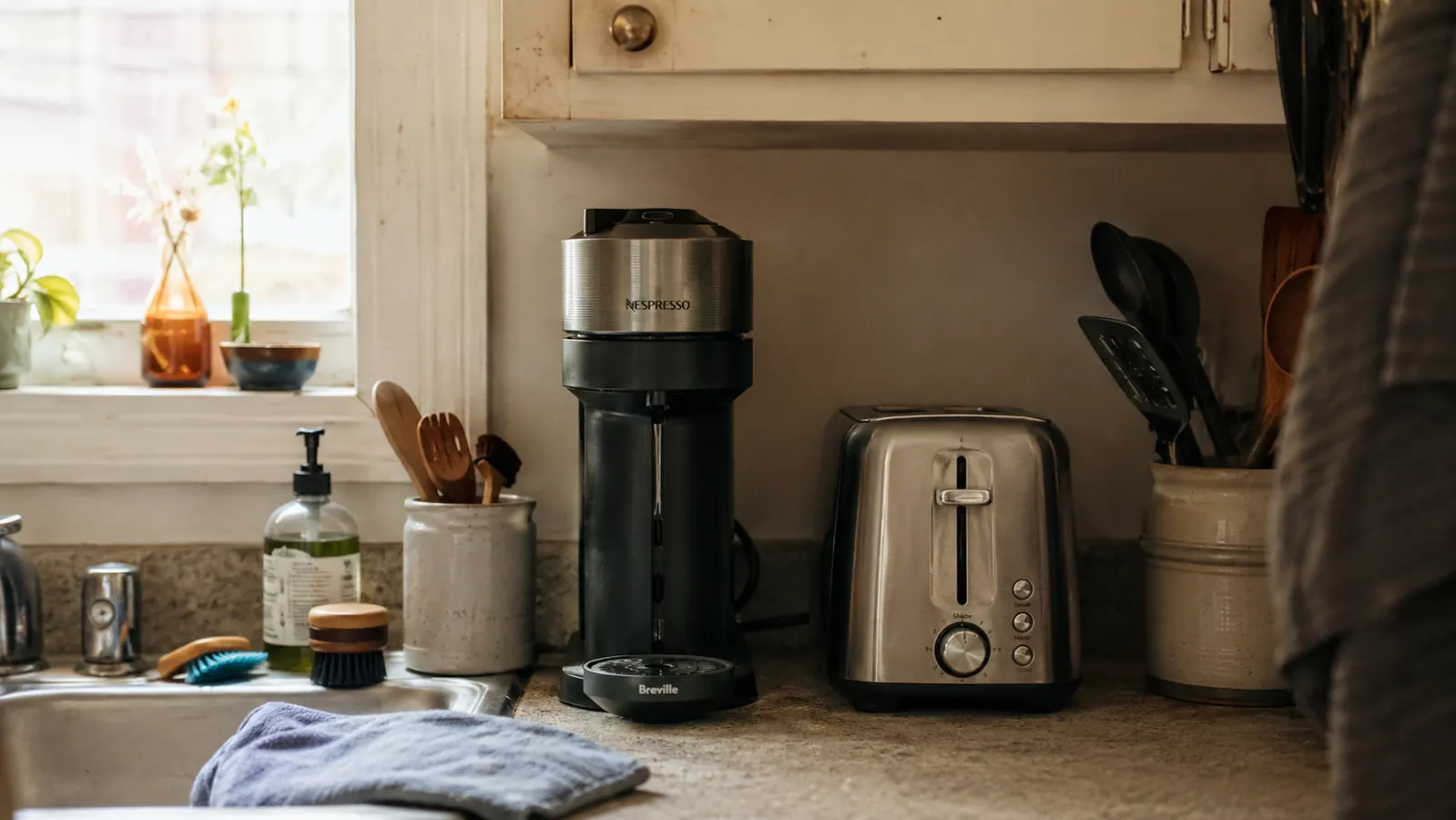
Before settling on the K-Express, I looked seriously at a Nespresso machine, which a couple of friends swear by for stronger, more espresso-like shots. I passed mainly on pod cost and pod availability. Nespresso capsules are harder to find at a regular grocery run near me, and I didn't want to be planning coffee purchases around a specialty aisle. I've put together a direct side-by-side if you want the full comparison on footprint, brew style, and pod pricing between the two.
I also considered just keeping the drip machine and getting more disciplined about only brewing what I'd actually drink. In theory that's cheaper. In six years of owning that machine I never once managed the discipline, so I stopped pretending a single-serve system was solving a hardware problem when it was really solving a habit problem. That's worth being honest with yourself about before you spend money on any coffee maker, compact or not.
What I Liked
- Genuinely narrow footprint, 4.7 inches wide, fits gaps a drip machine can't
- Consistent brew quality cup to cup, no burnt last-cup problem
- Three brew sizes plus a Strong button for a bit more punch
- No carafe or warming plate eating up extra counter space
- Simple button controls, no app or screen to manage
- Reservoir holds close to a week's worth of coffee for one person
Where It Falls Short
- Deeper than it looks in photos, at 13 inches it needs real clearance
- Per-cup pod cost is genuinely higher than ground coffee
- Strong setting still falls short of real espresso strength
- Reusable filter cup for your own grounds underperforms the pods
- Descaling light is easy to ignore until brew quality drops
The depth matters just as much as the width and gets mentioned far less. Measure both before you decide anything fits.
Who This Is For
This is the right coffee maker if you're making one or two cups a day, you have a genuinely narrow counter run, and you're tired of a carafe of coffee going cold and bitter before you finish it. It's also a strong fit if you're replacing a wider drip machine that's been eating counter space you can't spare, or if you just want a cup on demand without planning your morning around when the pot finishes brewing. The consistency alone, the same decent cup every time, is worth a lot after six months of relying on it daily.
Who Should Skip It
If you're brewing four or more cups a day, or coffee for a full household every morning, the pod cost will add up faster than it did for me, and a drip machine will almost certainly work out cheaper over a year. It's also not the machine for anyone chasing real espresso strength, or anyone who's committed to using their own ground coffee rather than pods, since the built-in reusable filter is more of a backup option than a real feature. This is a narrow, consistent, single-cup machine, and it's honest about being exactly that.
If your counter is as tight as mine, this one is worth a look.
See current pricing, availability, and customer photos on Amazon.
Amazon Check Today's Price on Amazon →